Showing posts with label Spiritual Discipline. Show all posts

Monday, December 23, 2019

"Healing the Soul" (part 3) by Lawrence S. Perry, B.S., M.Div

"Healing the Soul" (part 3)


Introduction

If you were to go the Colorado Olympic Training Center and talk to some of athletes in training and ask the question, "How do you prepare for a competition?" Some would say that it begins by preparing your mind. This preparation requires that you, through the discipline of meditation, concentrate on your given routine and imaging your completing the performance perfectly. The theory is that by training the mind the body will follow. No matter what the sport, ice skating, down hill slalom, diving, or gymnastics, you want to train your muscles to respond automatically to what your brain tells them to do. Such a mental excersise demonstrates the power of the mind to direct your human response. Taking this principle a step further, using the mind to heal the soul is an important concept in the healing of memories while allowing the Spirit of Christ to guide you along the way.

Over the years, I have used the gift of inner healing in helping people overcome emotional trama which has left them with a deep sense of guilt, shame, betrayal, the pain of physical abuse, abandonment, and the list goes on. For example, I have been able to witness a healing of a young man who accidentally killed his neighbor. He needed to find forgiveness. Then, there was the young mother who came to me filled with shame as she finally confronted the reality that she was the victim of incest. There was another woman who sought to heal her soul having been victimized by a rape when she was younger.  Each of these situations was successful as we prayed and allowed the Spirit to transform their memories.

Now, there are some in the Christian community who argue that this gift is not found in the Scriptures and therefore is not valid. I, however, will argue the point and direct them to the fruits of this spiritual exercise. Is it not the role of the Spirit of Christ to address the emotional wounds of his beloved? Doesn't Jesus still heal? 

The Memory


Consequently, to heal a memory you have to be able to return to that memory.  To do this, I remind my subject that their brains are like a DVR and are always recording what we see, feel, smell and touch. And with our minds, we have the unique ability to hit the rewind button and go back in time. When they do this, I usually have them get into a comfortable sitting position and then close their eyes. They are then instructed to go back to the day of the trauma and begin to describe in every detail what they see, touch, hear, or smell. It goes without saying that this can be difficult and emotional. There are times, however, when a subject cannot recall a specific memory. In such cases, there is a composite memory. The composite memory is made up of multiple memories woven into one. All of these memories are of multiple episodes. In any case, it is extremely important for the subject to articulate everything they are experiencing which helps me to gain insight to memory and trauma. As they articulate the event, there are many times when I can see some unique feature that was missed or deemed irrelevant, only to discover that these events are extremely important. After the memory is relived, we begin to discuss their thoughts, feelings, and observations of what they had experienced. This review of the event will at times offer new insights into their trauma.

Then, I will ask them to revisit the memory, only this time, to allow Jesus to become visible. What is interesting is that sometimes they can see him, and on other occasions they might hear His voice or sense His presence. In every case, I have to be careful not to direct the scene. Each person has to be allowed to imagine their own scenario without me interjecting my thoughts, as tempting as it is at times. Consequently, their healing comes from within them, which is critical.  If I were to interject my thoughts and feelings, then their healing can escape them. Their encounter needs to be their personal experience.  Furthermore, I have discovered that when the Spirit enters the memory, what is done, is far different from what I might think in terms of outcome.  For example, I was dealing with a subject who was victimized by incest. As she played back her memory and she saw Jesus enter the room, he walked up to the bed she and the relative were him. I was expecting the Christ to angrily confront the man. That did not happen. Rather, Jesus went over to the bed and put the little girl and the man on His knees and said, "I love you both!"  The little girl was then able to say to the man, whom she loved, "I forgive you."  This act was extremely important, since the relative had passed away a few years after this story. She finally had closure to her nightmare and found peace and resolution.

After we finished with the second memory, we had a debriefing. I then asked her, if that second memory with Jesus was real? She said that it was very real!  As we continued to talk, I could see a transformation in her face, and her face told the rest of the story. There were no more tears and no more tension in her facial expression. She was unburdened. Most importantly, as the Spirit guided her, the Spirit made know the true character of Jesus. She learned that in the ugly memory, that the Christ was there, and she was not alone.  As He made himself known, He expressed His love to her and the relative.  And finally, Jesus bought reconciliation and healing to her soul.

Conclusion

The healing of memories is an important tool for members in the Christian community who have been scarred by emotional trauma. When this is done with a good practitioner, this spiritual exercise can quickly address the wounds that damage the soul. These wounds need to be exposed by prayer, meditation, and discernment. As we use the gift of our minds to look into our past, we invite the Christ to transform those hurtful memories into  positive ones.  As a result, the memory that lives on in the person is a joyful encounter with the Lord of Life.

Wednesday, November 13, 2019

The Voice of God, by Lawrence S. Perry, B.S., M.Div

THE VOICE OF GOD

THE DEBATE
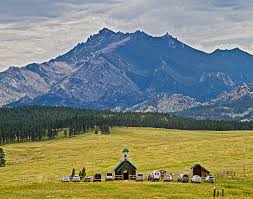
Each fall while living in Douglas, WY, I would drive up to the Laramie range to gather my load of fire wood for the winter. It was my quiet time, and this trip was to be no different.The drive up to Esterbrook, where this little chapel was located, would only take about 40 minutes. When I got into my truck and set off, I immediately knew that this trip was going to be different.  Out of nowhere, I was entering a debate with God. 
                                                                                                    Allow me to put the debate into context.  A week prior, I was down in Cheyenne at a Christian conference. The leader of the conference was raising the question as to whether or not we had dedicated our lives to Christ.  If not, he was going to offer an altar call. This was rather a strange event for an Episcopal Church!  Did I go up? No.  You see, beloved, I'd been baptized, confirmed, sang in the choir, and was on the governing board of our local parish. In other words, I was a member in good standing! So, why did I have to make this new commitment?  The question haunted me all week, and now it was following me all the way up the mountain. I could not shake the voice that was reigniting in my head.

As I got to Esterbrook Chapel, I stopped my truck, slammed the door and yelled out, "What in the hell do you want from me!?"  The voice said, "I want your commitment!"  I finally capitulated as I declared one condition. "Don't put me on a soap box somewhere thumping on a Bible and telling sinners  to repent. All of a sudden, the debate was over as I committed my life to Christ.  It was a moment in time that changed the course of my life.  

From that moment on, my life was slowly being transformed. That which I used to do, no longer had the same appeal. I found myself buried in inspirational books and reading the Bible for the first time.
The funny thing was, I hated to read for pleasure--dyslexia does that!


Saturday, November 9, 2019

Walking as a Spirtual Discipline, blog by Lawrence S. Perry

Walking as a Spiritual Discipline

Nov.2019
In this blog, I would like to invite you to take a journey with me.  No, not a physical journey to some far off land. This journey will require you to use your imagination and enter into your soul and explore some of your deepest thoughts. Yes, it is a spiritual journey, one that will help examine your life and look at where you have been and where God's Spirit is leading you. At times, this will not be an easy journey, because it may require that you have to look at some difficult times in your life.  But, trust me, the time you invest will be well worth the effort as you come to understand that the path upon which you found yourself will be a path you would not have chosen for yourself.  However, you will rejoice and celebrate as you find new meaning in your life.

 Why Walking?  

I suspect that when you got out of bed, you did not give the steps you took much thought. If you were not afflicted with a physical deformity, walking is something which we do not think much about.  Each step is an automatic sequence in response to your brain waves. We think about a direction we want to go, and Zap! we are on our way. What if the act of walking is more that just a mechanical exercise? What if the act of walking takes us down a path that opens some of the deepest secrets of our lives? What if walking opens up Godly revelations that lead to new visions or addresses old concerns? Would this idea change what we think, act and feel about the world in which we live and how we live out our lives? With these thoughts in mind, we will quickly conclude that walking is a spiritual discipline that may be worth exploring.

What is spiritual about "walking"?

A number of years ago, I had the opportunity to supervise a Christian Jr. high church camp.  It was always a week of high energy! To help release some of that youthful energy, I always scheduled one day to hike up Laramie Peak just west of Douglas, WY.  The mountain ascended 10,000 into the heavens, and it took hours traversing the switchbacks to reach the top. Once reaching the top, I had the kids sit down to eat their lunches and then took the time to open the minds of these impressionable children. My attempt was to raise questions as to what spiritual lessons they had learned on the long trek up the mountain. We talked about how difficult the climb was, what we encountered along the way, how the terrain changed along the way, and whether or not this long difficult journey was worth it. This discussion was taking place as we gazed out over the horizon.  You see, from the peak you could look to the east and your eyes could see the western plans of Nebraska. If you looked to the south,  you could gaze in awe at the peaks of the Rocky Mountains.  From our vantage point, I reminded the kids that a few hours earlier when we started our trek in the valley below, our vision was obstructed by mountain and trees encountered along the way. But now, we could lay claim to the magnificent glory of God and his creation. Our vision was unobstructed, and we could see to the far reaches of the horizon! Only then could I teach them how we can look at life from different perspectives and how we encounter God along the way.


What I had hoped for was that the kids could learn what it meant to walk in a sacred space. And while in that space, to stop and listen to the voice of God as He was whispering in their ears.

Now, I wish I could say that these thoughts were my original pronouncements, however, I cannot take credit.  The reality is that my wisdom was gleaned through the Old and New Testaments. You see, the Bible has a lot to teach us about what it means to "walk".


Walking is not just the physical means to get from here to there. Walking, as used in the Scriptures, will offer a profound definition which point us to a spiritual journey. If you have any doubts, just look at the many ways in which the Bible uses the term. For example: In the Old Testament the people of Israel are always called upon to "walk" in the ways of the Lord. (1st Kings 2:1-4) In Isaiah 33:15f the prophet encourages his followers to "walk in righteousness", and they would find refuge in God. In John's gospel, the apostle records Jesus as saying that He, Jesus, is the way, the truth and the life, whoever believes in him shall have eternal life. (Jn. 14:6)  In other words, those who walk in the footsteps of the Christ will find true life! Furthermore, John reminds us that when we walk, we walk in love. (2 Jn. 6) Walking with God opens our minds and souls as to what it means to love.

Consequently, we cannot deny the importance of walking as a spiritual disciple. So I ask you, when was the last time you took a walk? And when was the last time you stopped to hear the whisper of God's voice in your soul? You're now invited to join me in walking into sacred places!


Exiled! Introduction :  One of the first stories told in the Bible is the story of the expulsion of Adam and Eve from parad...